Why We’re Returning to the Basics—For Our Health, Our Land, and Our Future

written by

Janet Mathes

posted on

December 11, 2025

Welcome to the very first entry of Pasture & Iron: A Farmhouse Kitchen Blog. I’m so grateful you’re here. This blog is an extension of our life at Iron Root Pastures, our regenerative farm tucked into the rolling hills of Northwest Georgia. Every day, we walk alongside our animals as we move them across fresh pasture, building healthier soil with every rotation. Regenerative farming isn’t just what we do—it’s the foundation of how we cook, how we raise our children, and how we hope to nourish our community.

But our story didn’t start on a farm.

It started with a reaction to wheat.

Years ago, my husband, Ernie, began having unexpected reactions to foods he’d eaten his entire life. That single moment sent us on a path that changed everything: how we ate, what we purchased, what we believed about food, and eventually… where we lived and how we farm today.

We began reading every ingredient label on every single product that came into our home. If we didn’t recognize something, we looked it up. One search turned into another, and suddenly we were staring straight into the reality of our food system—synthetic chemicals, artificial colors and flavors, preservatives, fillers, toxins, and marketing claims that meant almost nothing.

Our first small change was switching to organic produce to avoid herbicides, pesticides, and synthetic fertilizers. Then came organic meats and eggs, hoping to avoid antibiotics and hormones. I remember proudly bringing home a carton of “Organic Free-Range Eggs,” convinced I had made the best choice.

When Ernie asked, “Why did you buy those?” I responded confidently,

“Because they’re free range!”

In my mind, that meant chickens roaming on a sunny pasture with a barn close by. But that isn’t what the label means at all. “Free range” only requires a door on a barn containing tens of thousands of birds. There’s no guarantee they ever step outside. No requirement for green grass, fresh air, space to forage, or even access time.

It was a wake-up call. Words on a label can be marketing, not meaning.

We realized that the food we wanted—clean, nutrient-dense, truly pasture-raised—wouldn’t be found in a grocery store. So we searched for farms aligned with our values, and that search introduced us to regenerative agriculture. Once we understood how regenerative farming heals land, animals, ecosystems, and people, we couldn’t unsee it.

And that’s when the dream began.

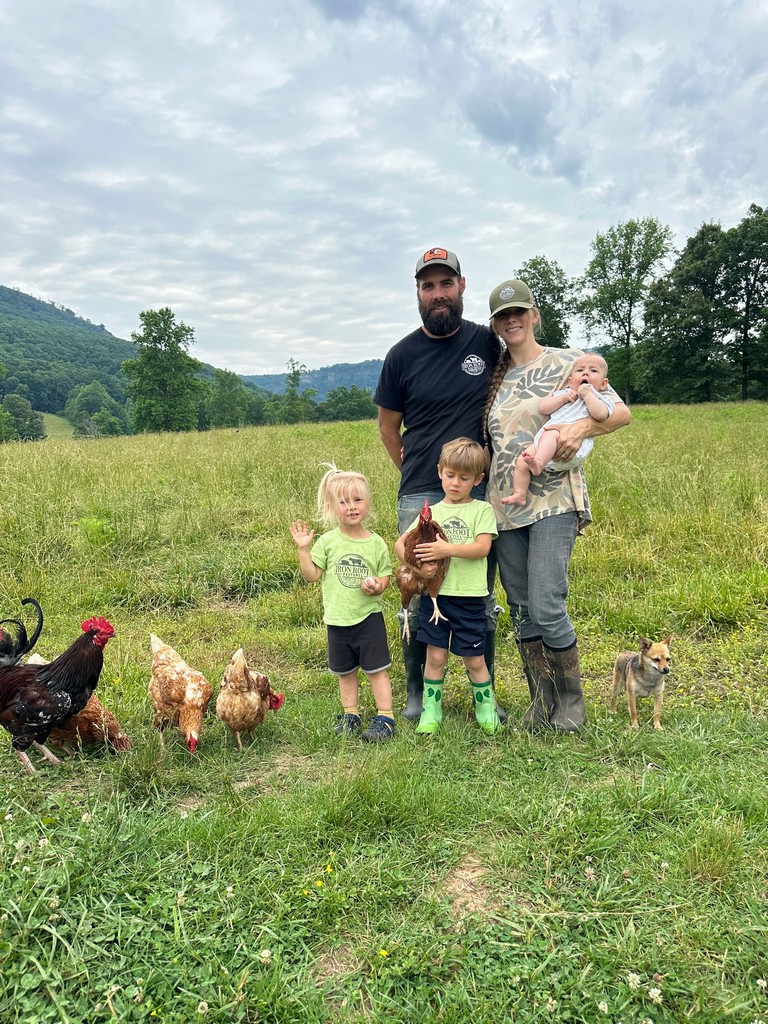
A dream that eventually became Iron Root Pastures.
Regenerative Farm Family.jpg

Starting a regenerative farm has been the hardest, most humbling, most rewarding chapter of our lives. It’s labor-intensive and full of constant learning, but it allows us to raise food the way it’s meant to be raised—ethically, intentionally, and with deep respect for both the land and the animals.

That philosophy doesn’t stop at the farm gates. It carries right into our kitchen.

Cooking the Old-Fashioned Way—With Intention

As we changed the way we raised food, we naturally changed the way we cooked. We returned to the basics—not because it’s trendy, but because traditional cooking is deeply connected to nourishment.

We cook with purpose.

We honor the whole animal.

We make our butter, render our own lard, tallow, and schmaltz—the very fats people have thrived on for generations.

These cooking fats aren’t just flavorful—they’re rich in bioavailable nutrients, free from seed oils, and a direct result of how we care for our animals. When you cook with the whole animal, nothing is wasted. Bones become broth. Fat becomes fuel. Meat becomes memories around the table.

Regenerative cooking mirrors regenerative farming:

use everything, waste nothing, and recognize the value in every part.

Why This Blog Exists

Cooking with Iron Roots is a space where those values come to life. Where we share recipes, stories, tips, and traditions that connect us back to real food—the kind you can trust, the kind your great-grandparents would recognize.

Our mission is simple:

Healthy Pastures, Healthy Animals, Healthy YOU.

Because healing our soil starts with healing our food,

and healing our food starts in our own kitchens.

From our family to yours—

Janet, Ernie, Miran, Aurelia & Silas

More from the blog

What is Regenerative Farming?

What Is Regenerative Farming?  A Guide to Restoring Soil and Sustainability In recent years, regenerative farming has gained traction as a revolutionary approach to agriculture. But what exactly is it, and why does it matter? Unlike conventional farming methods that deplete soil and require heavy chemical inputs, regenerative farming is a holistic system that restores soil health, enhances biodiversity, and promotes long-term sustainability. The Core Principles of Regenerative Farming Regenerative farming is just about avoiding harm and actively improving the land. Here are the key principles that define this approach: 1. Soil Health Comes First Healthy soil is the foundation of regenerative farming. By focusing on soil microbiology and organic matter, farmers can increase water retention, nutrient availability, and resilience against droughts and floods. Practices like composting, cover cropping, and reduced tillage help build rich, fertile soil that supports plant and animal life. 2. Minimizing Disturbance Traditional farming relies heavily on plowing and tilling, which disrupts soil structure and releases carbon into the atmosphere. Regenerative farms minimize soil disturbance by using no-till or low-till methods, which keep beneficial microbes and fungi intact, allowing for a thriving underground ecosystem. 3. Diverse Crop Rotations and Cover Crops Monoculture farming (growing the same crop year after year) depletes soil nutrients and increases pest vulnerability. In contrast, regenerative farms embrace crop diversity and use cover crops to prevent erosion, fix nitrogen, and suppress weeds naturally. 4. Integrating Livestock for Natural Fertilization Rather than relying on synthetic fertilizers, regenerative farms often integrate livestock in rotational grazing systems. Animals play a crucial role in cycling nutrients, aerating the soil, and building organic matter. When managed properly, livestock can regenerate grasslands and sequester carbon. 5. Eliminating Chemicals and Synthetic Inputs Regenerative farming works with nature, not against it. That means eliminating synthetic fertilizers, pesticides, herbicides, and fungicides that degrade soil health and harm beneficial organisms. Instead, farmers use natural solutions like compost, biological pest control, and companion planting to maintain balance. 6. Encouraging Biodiversity A healthy farm is a diverse farm. Regenerative farming encourages biodiversity both above and below ground. Pollinator-friendly plants, hedgerows, and natural habitats for beneficial insects and wildlife all contribute to a resilient ecosystem. 7. Carbon Sequestration and Climate Benefits One of the most powerful aspects of regenerative farming is its ability to capture carbon from the atmosphere and store it in the soil. By increasing soil organic matter and plant biomass, regenerative farms can help mitigate climate change while improving food security. The Impact of Regenerative Farming By adopting regenerative practices, farmers can: ~ Increase soil fertility and water retention ~ Reduce input costs by eliminating synthetic chemicals ~ Improve animal health and welfare ~ Enhance food nutrition and safety ~ Restore natural ecosystems and biodiversity ~ Sequester carbon and combat climate change At our farm, we take pride in these principles.  We are committed to producing food that is not only organic, soy-free, corn-free*, antibiotic-free, and vaccine-free but also farmed in a way that regenerates the land for future generations. Join the Regenerative Farming Movement Regenerative farming is more than just a trend, it is the future of sustainable agriculture. Whether you're a farmer looking to transition your practices or a consumer wanting to support regenerative food systems, every choice matters. By choosing to buy from regenerative farms, you are investing in a food system that prioritizes health, sustainability, and environmental stewardship. Together, we can build a better future for our soil, our animals, and our communities. Your support for Iron Root Pastures you are joining our mission to restore the land one field at a time.